


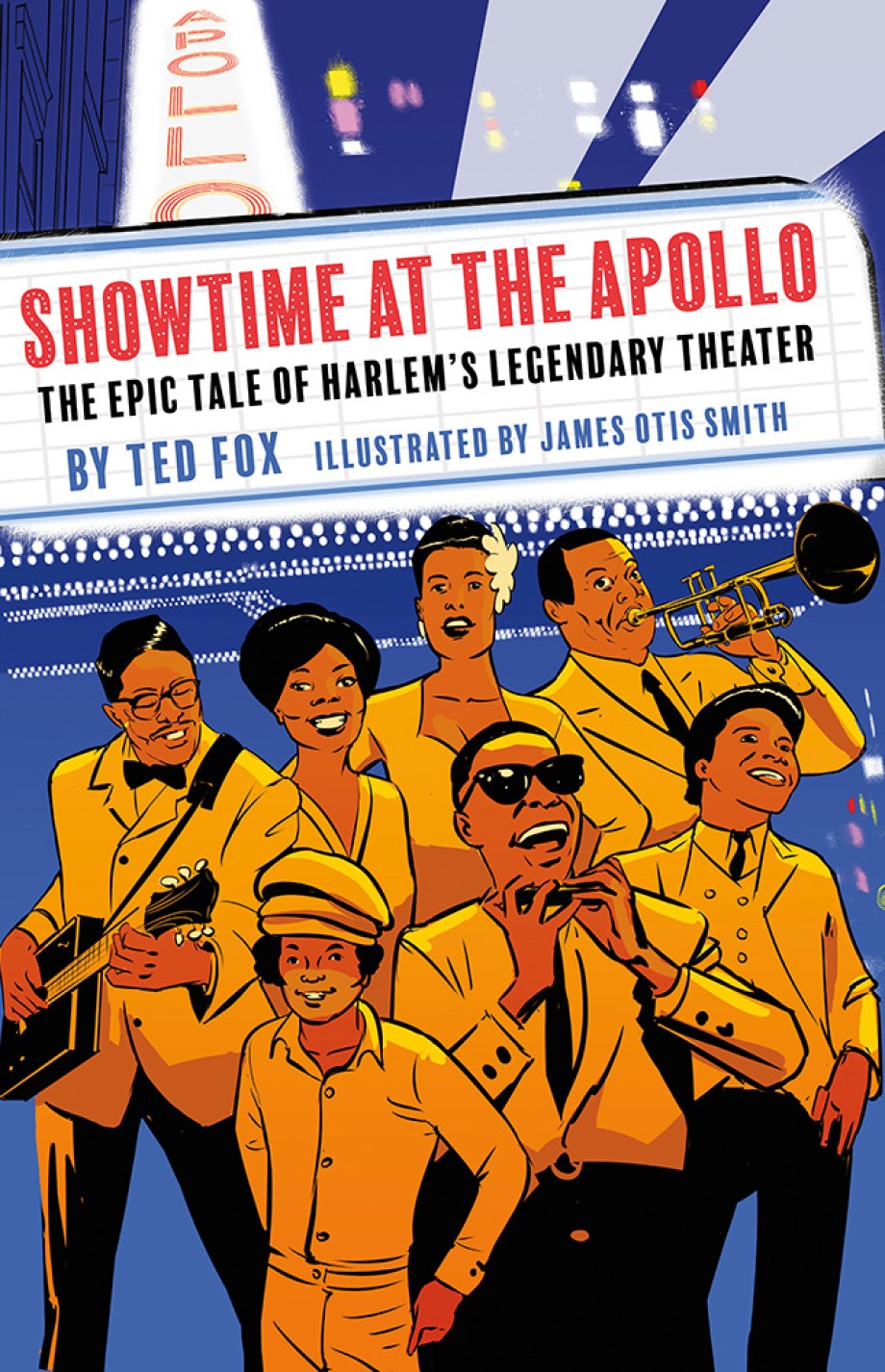

Ted Fox's graphic novel adaptation of the definitive history of the Apollo brings the legendary Harlem theater to life.
Since its inception as an African-American theater in 1934, the Apollo, and the thousands of entertainers who performed there, have led the way in the presentation of swing, bebop, rhythm and blues, jazz, gospel, soul, funk and hip-hop—along with the latest in dance and comedy. The Apollo has nurtured and featured thousands of artists, many of whom have become legends. The beauty they have given the world—their art—transcends the hatred, ignorance, and intolerance that often made their lives difficult.
Today, the Apollo enjoys an almost mythical status. With its breathtaking art by illustrator James Otis Smith, this graphic novel adaptation of Showtime at the Apollo brings to life the theater's legendary significance in music history, African-American history, and the culture of New York City.
Praise
"This graphic treatment adds a new dimension to a music book that was already hailed as a classic. Most graphic adaptations aim to reach new generations of readers with a work that is flashier but less substantial than the original. This collaboration between Fox (In the Groove: The People Behind the Music, 1986, etc.) and illustrator Smith represents a new experience for readers, one with an immediacy and vitality that text alone might never approach."Kirkus Reviews - STARRED review
—
“The graphic novel “Showtime at the Apollo: The Epic Tale of Harlem’s Legendary Theater” is like a sprawling Hollywood biopic… The book also shines a light on Harlem and black culture in America.”The New York Times
—
"It’s a fizzy, entertaining, jubilant window into a space where so many artists became icons, overcoming hate and ignorance. It’s an essential guide to one of New York City’s greatest cultural institutions."Entertainment Weekly
—
“Anyone interested in African American music and history and pop culture history will find this a captivating read.”Library Journal
—Library Journal
—
“This is a vibrant, exultant, and soulful history.”Publishers Weekly
—
“This lively graphic novel traces the theater’s place in rhythm and blues, jazz and hip-hop history and its significance to New York City.”Variety
—
"Showtime not only adapts Fox’s book, originally published in 1983, it expands upon it, bringing the story of the venue up to date, including events as recent as 2018 as it tells the complete story of one of the most iconic venues in the country."The Hollywood Reporter
—
"...even those who are deeply familiar with the Apollo will find some delightful surprises in this evocative fusion of text and images."The New York Jazz Record
—
"...this graphic version is a beautiful, heartfelt, and rich tribute to a musical form, a vital location, and a pure American vision of connecting with the audience in the theater and everywhere else. We can feel the Apollo's heartbeat on every page, and that sensation will make a true believer of even the most jaded reader."PopMatters
—
“Music lovers and history buffs alike will delight in this updated classic, and Smith’s stunning visuals will bring this important and exciting work to a whole new generation of readers.”Bookish
—
If you love the Apollo, this book is for you! If you’ve never heard of it, this book is for you! Have you listened to any American music from the 20th century? This book is for you!... A dynamic, fact-filled offering for teens curious about musical history.”School Library Journal
—